

Description
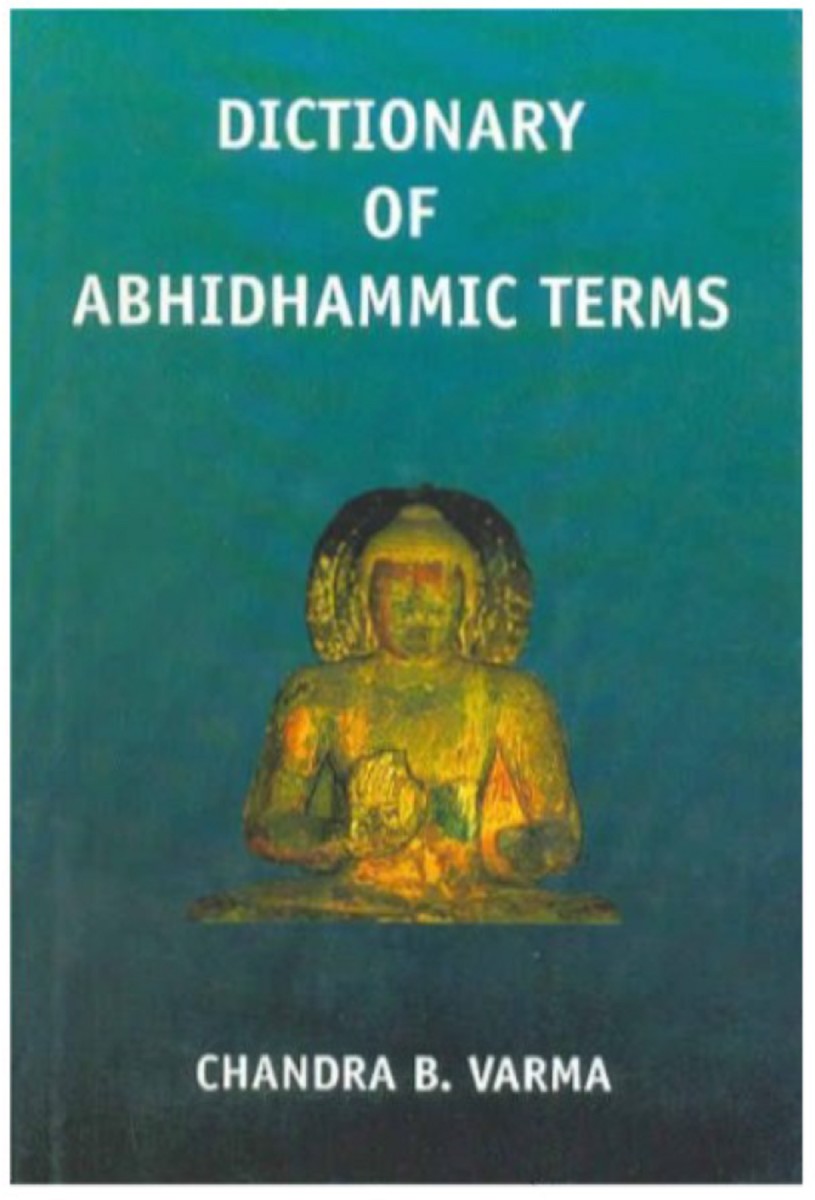
Dr. Varma [in Dictionary of Abhidhammic Terms] deals with major issues which confront any translator of philosophical works, among them (pp. ix-x) the relative weight one should accord to the understanding of a text in its own tradition of interpretation versus dependence on philological criteria, and argues (p. x), reasonably, that, ‘Any work that deals primarily with philosophy and psychology requires particular clarity of thoughts and expression, where readability, intelligibility, comprehensibility, contextuality, accuracy, consistency, cogency and simplicity are the chief priorities rather than mere literal translations or philological analyses.’ In the dictionary proper, beginning with a long entry on ‘Abhidhamma’ (pp. 1-10) and ending with a short entry on ‘yoga’ p. 173), Dr. Varma pays careful attention to literal and contextual interpretation, with ample references to primary and secondary literature and to the history of important concepts. In sum, Dr. Varma’s work is a brief modern compendium that, I think, should be quite useful to serious students of Buddhism.’
– George Cardona, Professor of Linguistics, University of Pennsylvania; Member of American Philosophical Society, The American Academy of Arts and Science, USA
Dr. Varma is perhaps best known on the world stage of Indian scholarship as the Principal Investigator of the United Nation’s sponsored project on thematic interpretation of the sculptures and paintings of the Buddha from Ajanta, Nagarjunakonda, Bharhut, Sanchi, Amravati, Goli, Thai monasteries and elsewhere. Both the Buddhist art and his commentaries, and recreation of the Jataka stories, can be found on the web-site of the “Indira Gandhi National Centre for the Arts,” at www. ignca.nic.in/jatak.htm. This major project is linked to Dr. Varma’s overall intention of highlighting Buddhist studies in India and perpetuating Buddhist learning in India. In this connection his identification of various Buddhas, such as Dipankara Buddha (the first Buddha as recorded in the tradition) on the sites of Peshawar and Gandhar (now in Pakistan) and of the nine Buddhas on the mural paintings of Ajanta, is original work that places him in the front rank of scholarship about Buddhism in India.
Dr. Varma is a major scholar of Pali literature, as exemplified in his establishing the text of the Abhidhammatthasangaha-Sarupa, which had previously remained undeciphered and unstudied because of its composition in the obscure Cambodian M£la script for writing Pali. The manuscript of the text, which is housed in the Bibiothèque Nationale in Paris, with classification as “pali manuscript, no. 353,” was erroneously ascribed to “Siribandha” in A. Cabaton’s Catalogue sommaire des manuscrits sanscrits et palis, Paris 1907, until it was deciphered.
His Dictionary of Abhidhammic Terms has likewise contributed to his renown in the field of Buddhist studies. Without commenting further on his individual publications his scholarly articles, including the Jataka series, number in the 100s. He has published other books on such diverse subjects as Buddhist Phenomenology and Methodology for Translating Works in the History of Science.
– Charles S. J. White, Professor Emeritus, Philosophy and Religion, American University, WASHINGTON, DC, USA



Reviews
There are no reviews yet.